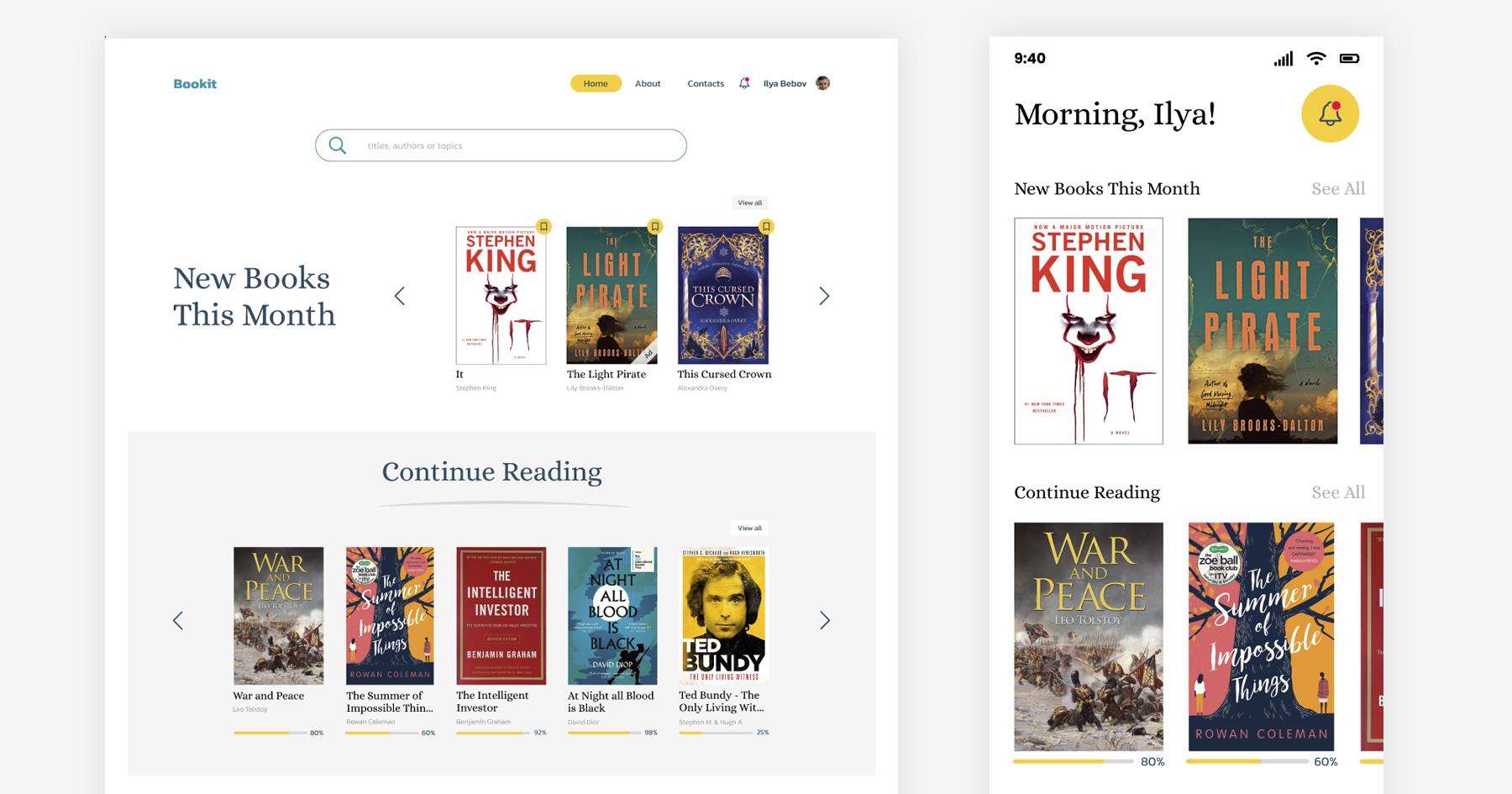
This is a concept for a design of an application and website for reading books. Despite it being my first task from my UX Design course, it turned out really well. The application and website were supposed to include functionalities like:
- The ability to follow other readers: This would allow users to see what books others are reading, to view their ratings and recommendations.
- Rating system for books: Users would be able to rate and review books, which would help other readers in choosing their next read.
- Opportunity for authors to advertise their books: This would offer a platform for authors to promote their works and reach more readers.
To successfully complete this task, I applied my expertise in Research, Information Architecture, Wireframes, Personas and Visual Design to create а user-friendly design.
The Goal
The goal of this app is to make reading е-books easier and more convenient for users, that keeps users coming back again and again. For achieving that, my approach is to make everything really easy and intuitive for the user to avoid drop-offs at any stage.
What is the process?
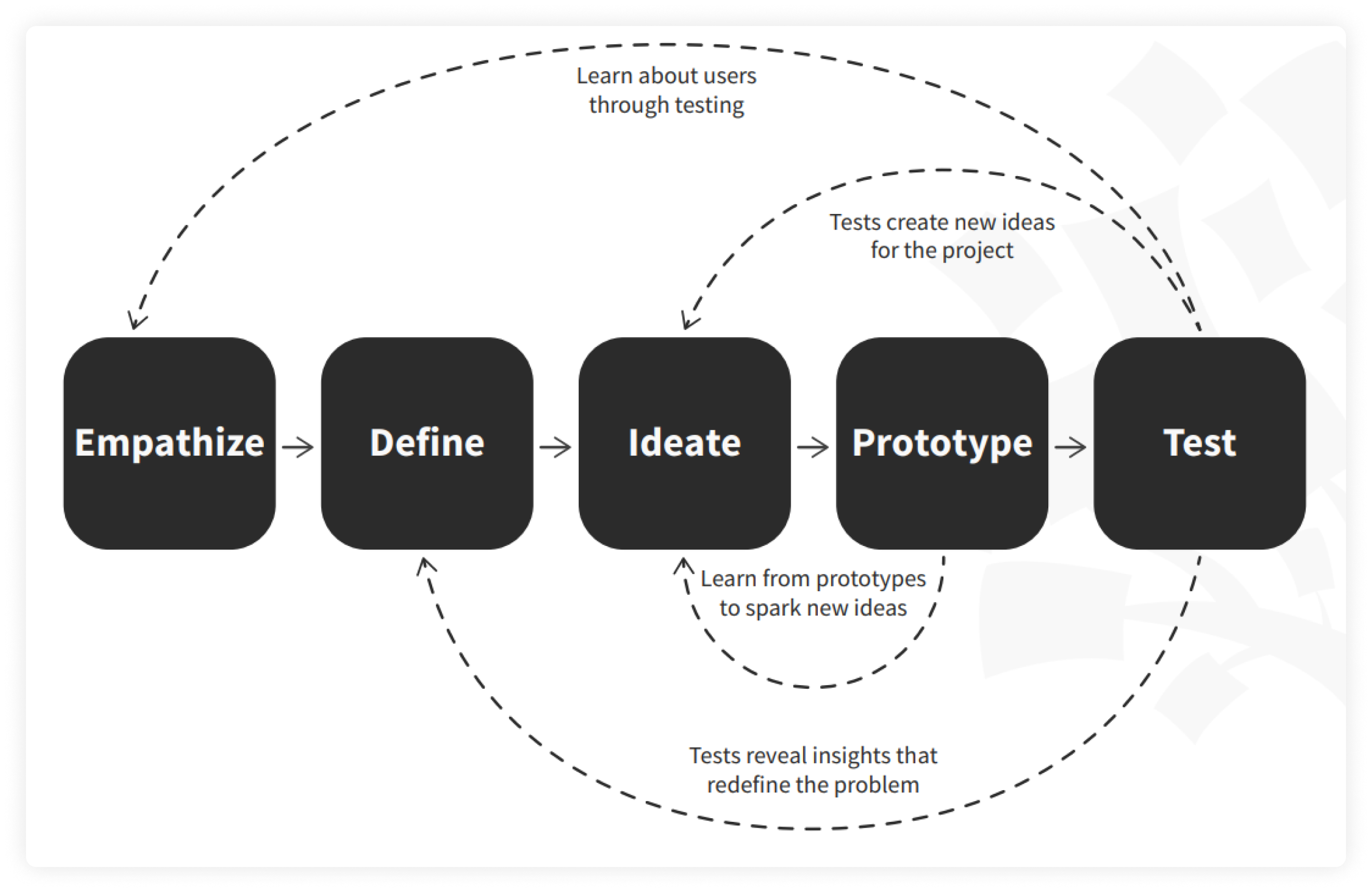
The process I use is called design thinking. It is a 5 steps non-linear iterative process.
Target Users
The intended audience includes individuals of all ages who have an interest in reading books.
In summary:
- A user who already has a specific book in mind to read.
- A user who has a general sense of their preference, such as the genre, but is undecided about the author.
- A user unsure of their reading choice, who navigates through the assortment of books available, checks out recommendations, sees what others are reading or considers the latest book suggestions.
My design is made to work really well for my target audience, meeting their needs in the best way possible.
Reasearch
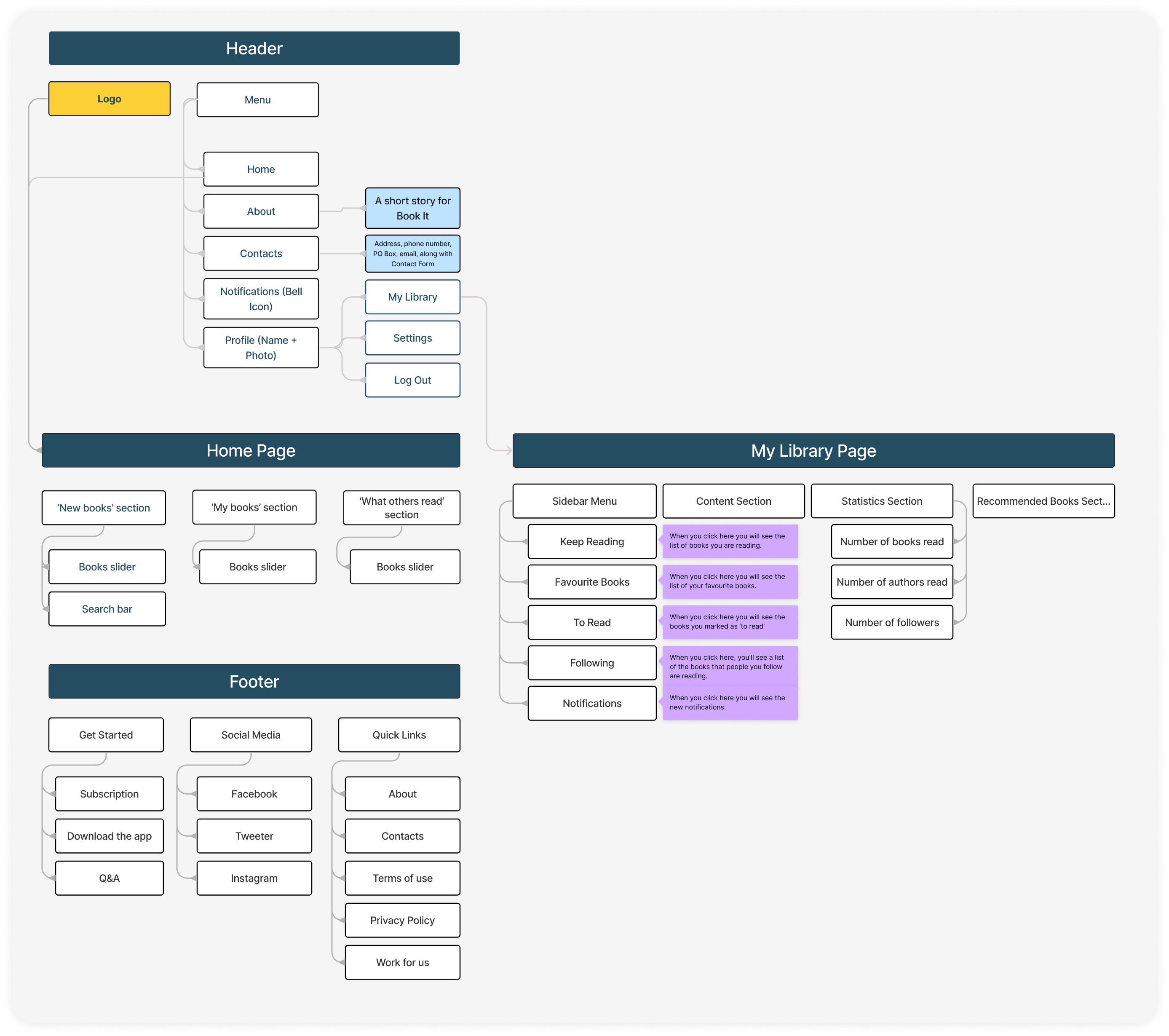
I went through some popular applications for reading books to get an understanding of what the user flow will look like and to also get a sense of what was familiar to all applications. This research helped me to properly design the information architecture.
Personas
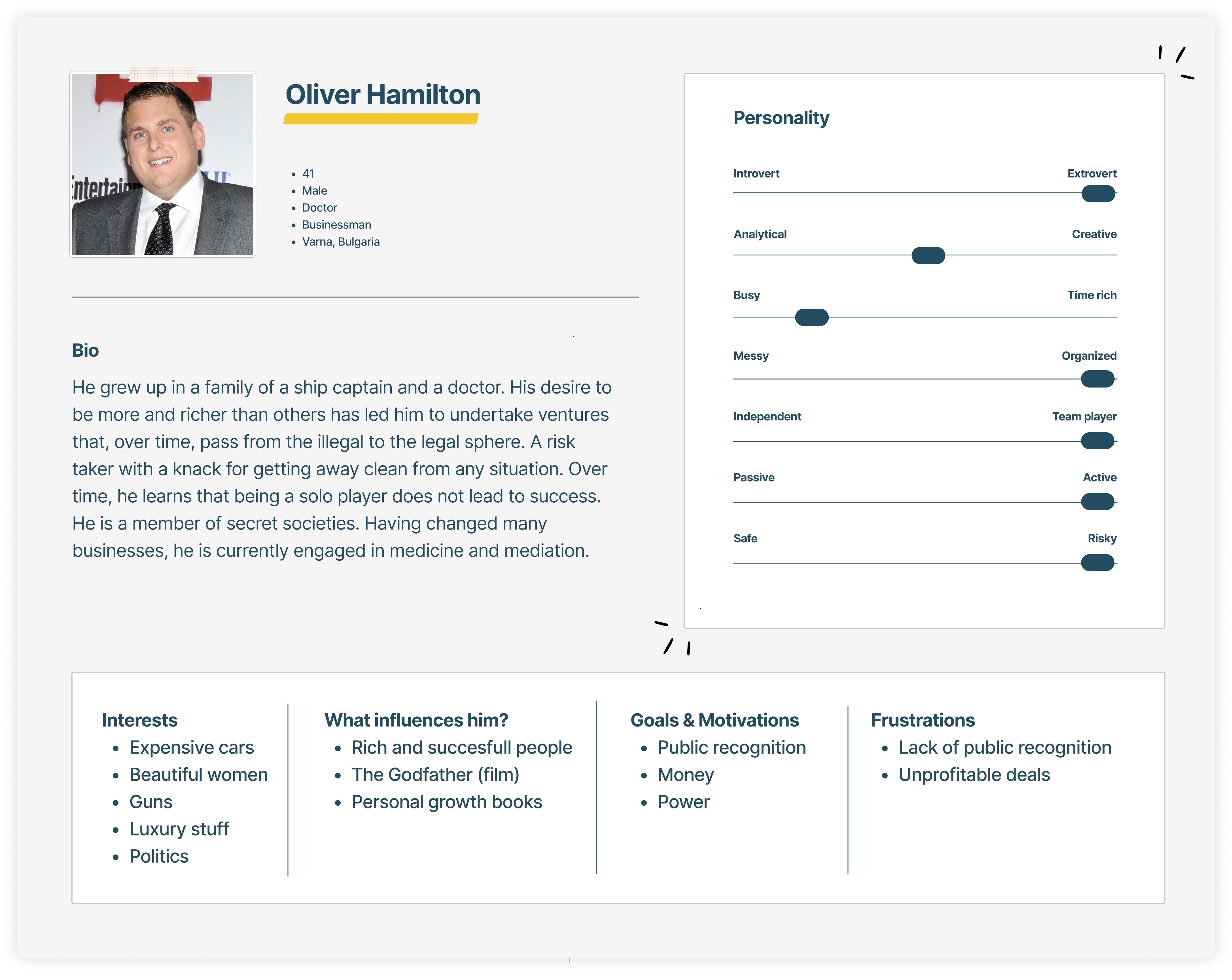
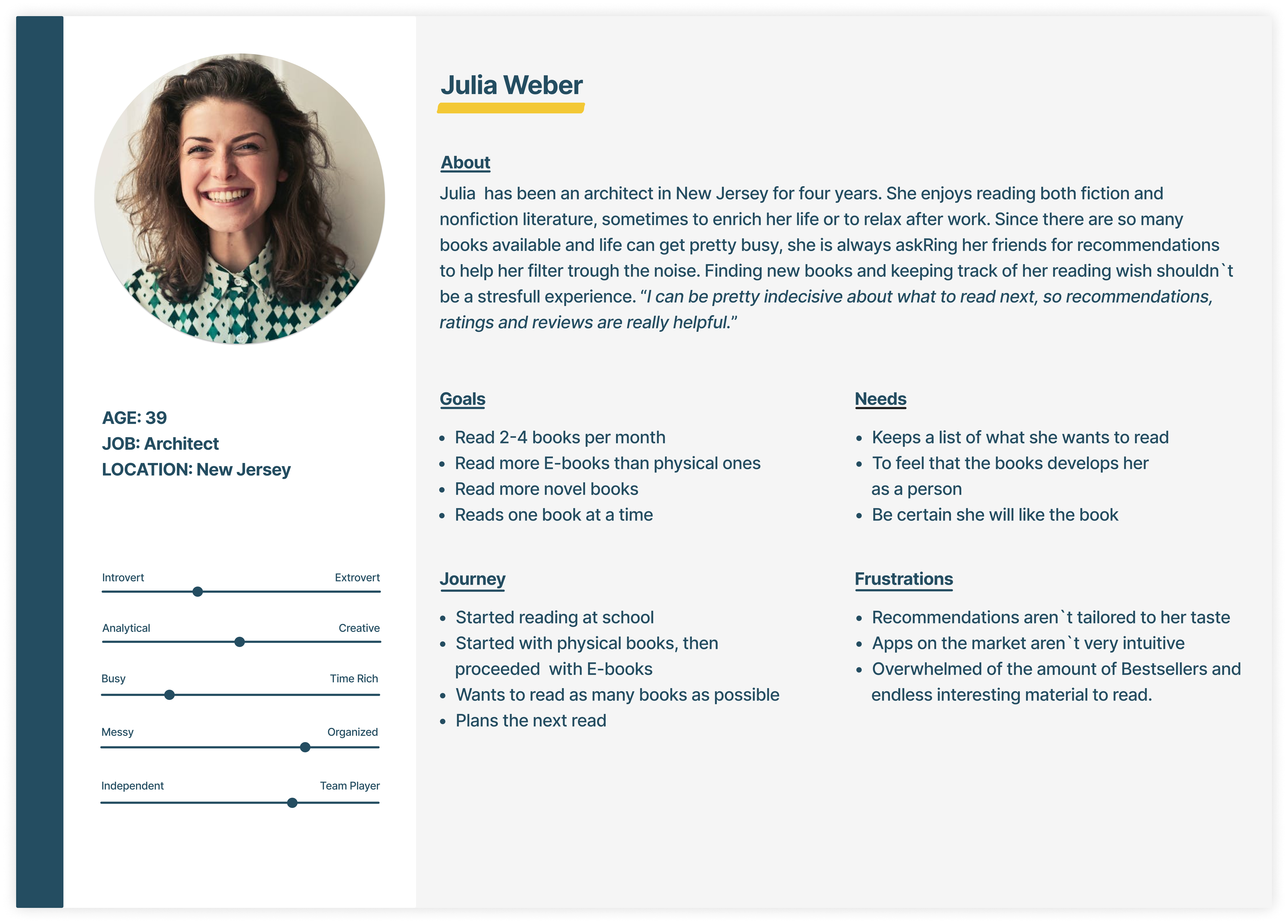
I created two personas, Oliver Hamilton and Julia Weber, as two extremely different but key types of people. Their needs, preferences, and behaviors will help me tailor the design to be as close to their expectations as possible. Let me introduce them to you:
Oliver Hamilton`s persona
Based on his persona, the design should focus on luxury and exclusivity, with curated content in politics, luxury, and personal growth, and a sophisticated recommendation system tailored to his interests. Networking features, a high-end interface, and motivational content should be included to resonate with his ambition and taste for the finer things. Additionally, the app should offer exclusive access, interactive elements for personal development, and customizable reading experiences, along with audio/video content and promotional partnerships aligned with his luxurious lifestyle.
Julia Weber`s persona
The persona of Julia Weber is more common individual and has shown us that we need to focus on three key directions in the design of our application.
- 1. Personalized Experience: Offer tailored book recommendations based on her interests and profession, and include features for setting and tracking reading goals.
- 2. User-Friendly and Rich Library: Ensure a vast e-book selection with an easy-to-use interface, incorporating elements of physical book reading for a seamless digital experience.
- 3. Social and Review Features: Integrate social sharing and access to reviews and critiques to help her confidently choose and share books.
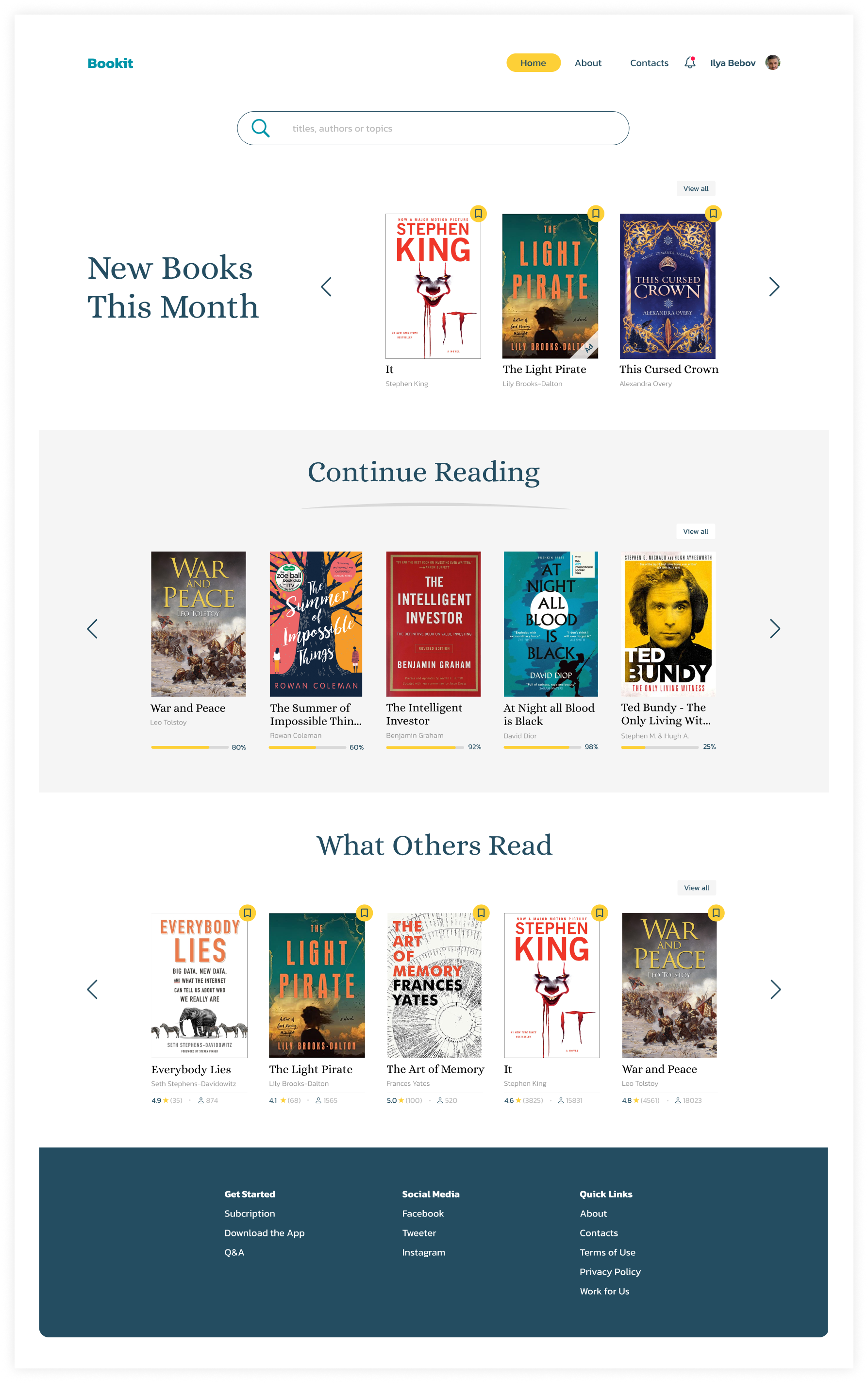
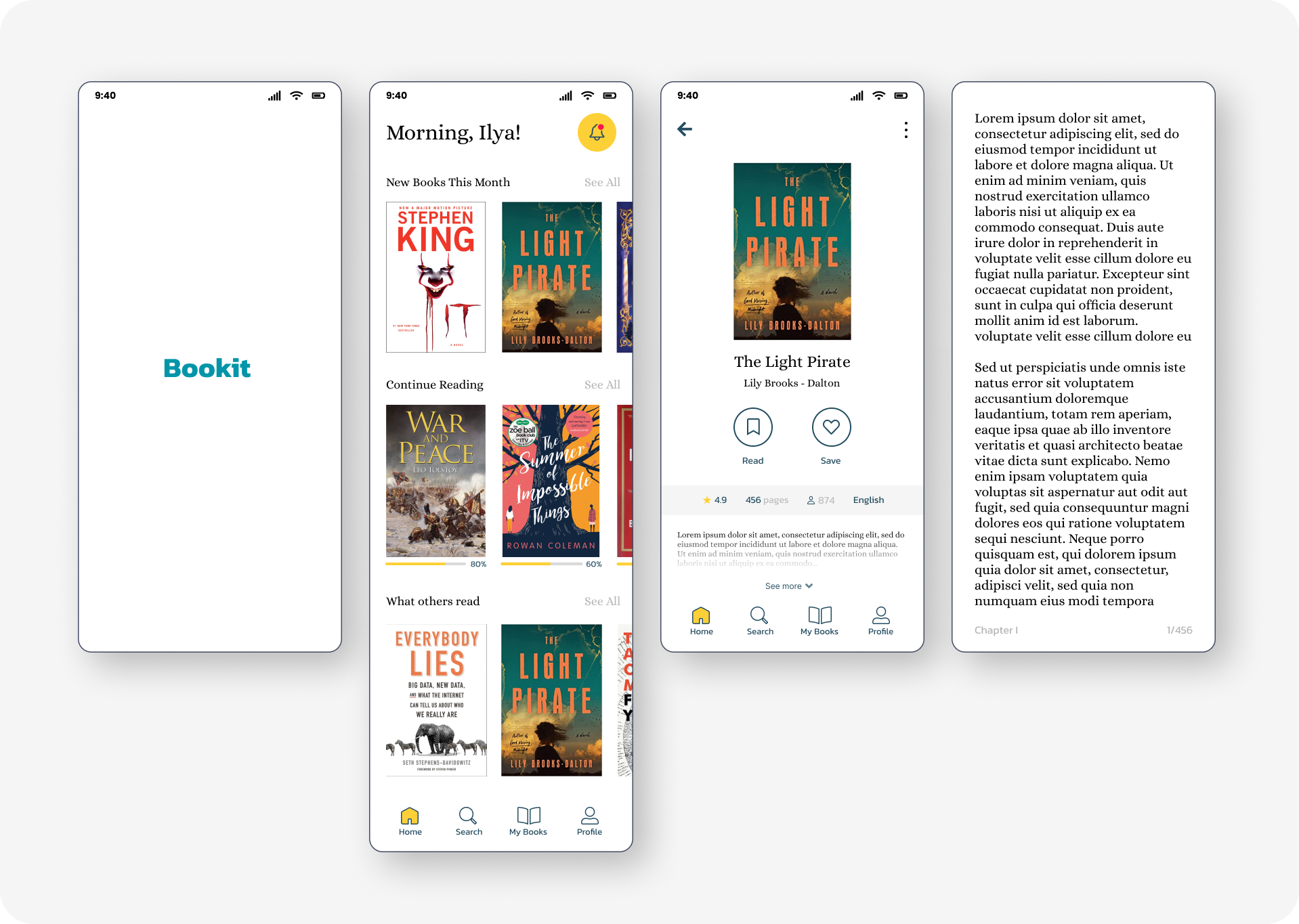
Based on what I have talked about so far, I’ve made a sample design that fits what our website and app users are looking for. Here it is:
Desktop Screens
Home Page
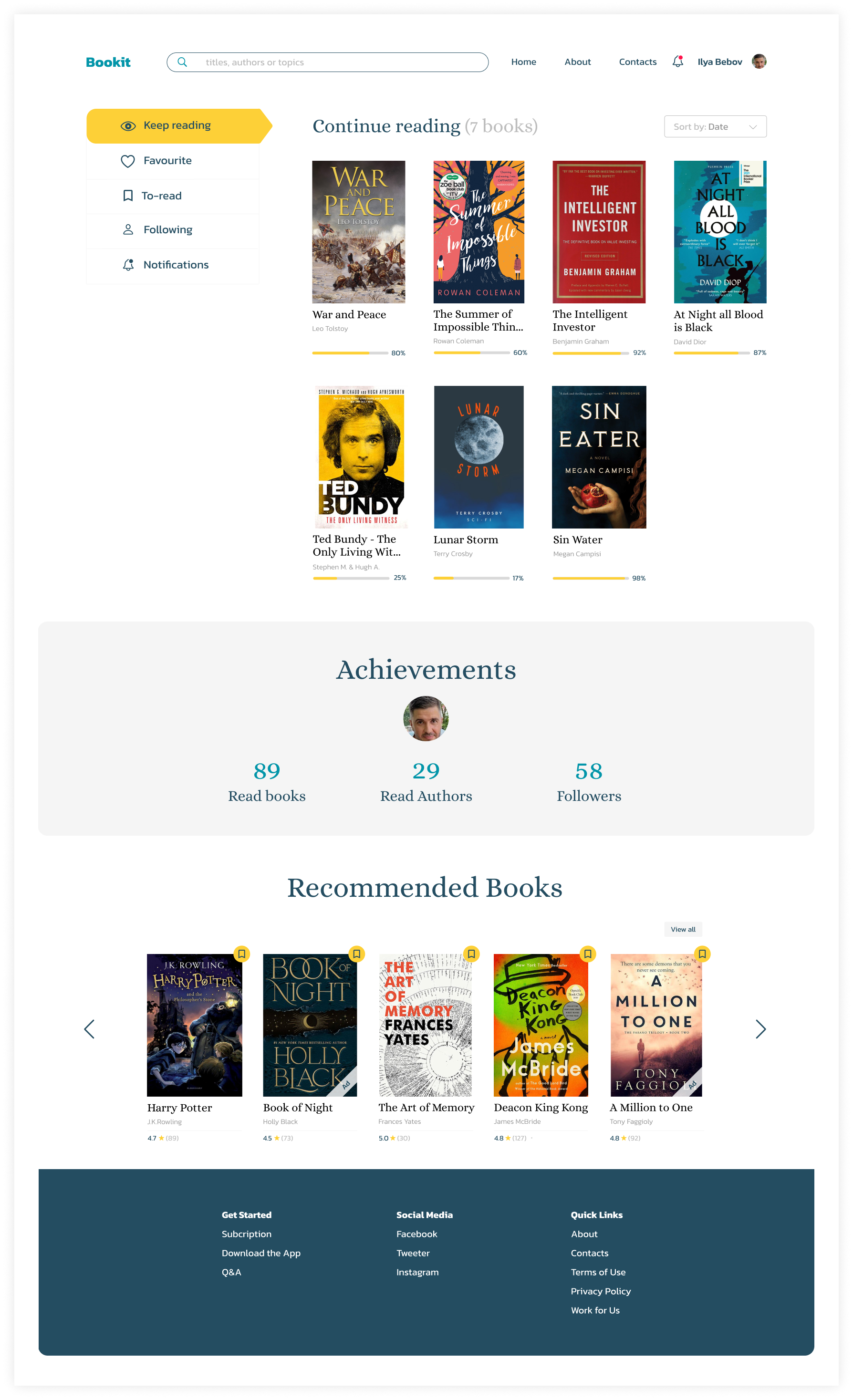
Keep Reading Page
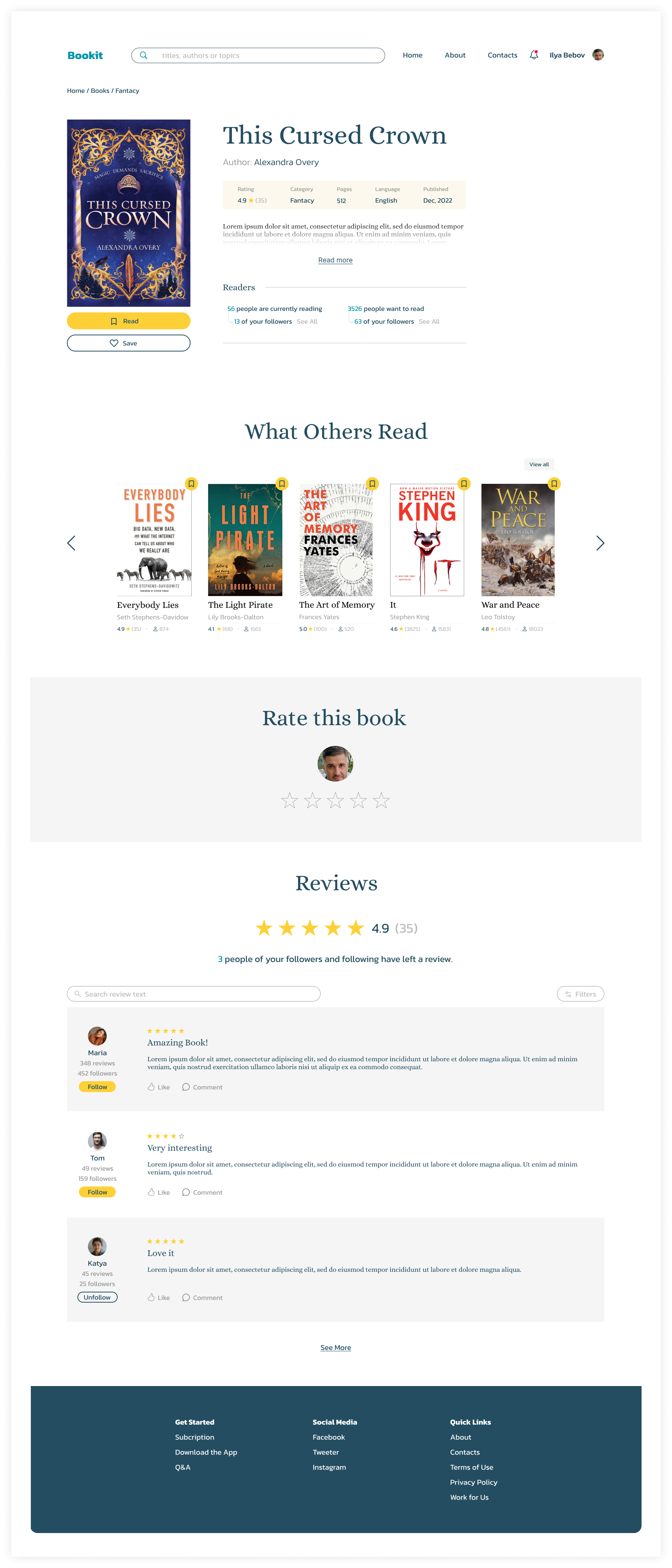
Book Page
Mobile App Screens
Conclusion
In designing ‘Bookit,’ I focused on creating an accessible and engaging platform for both readers and authors. For users, the easy navigation and personalized features like book recommendations and social sharing enhance their reading experience. For owners of application itself, the design supports author promotions and a diverse book selection, driving user engagement and expanding the platform’s reach. This approach not only satisfies readers’ needs but also presents valuable opportunities for authors and publishers to connect with their audience.